


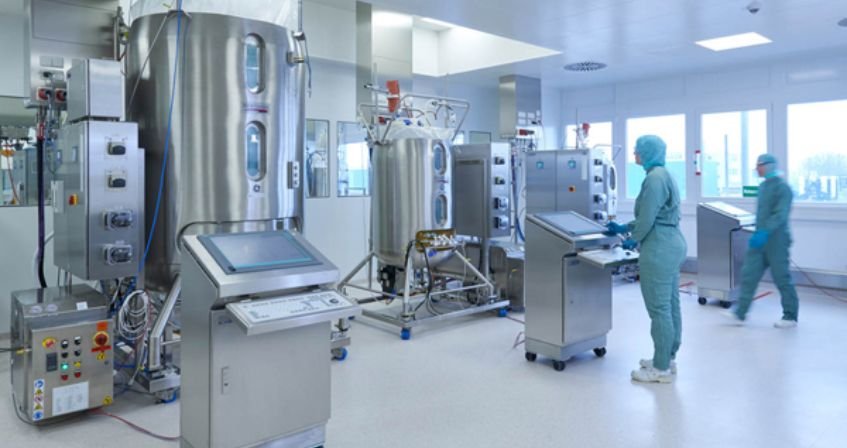
The Unique Risk Profile of Single-Use Bioprocessing Equipment
The UK biopharmaceutical sector is experiencing an operational revolution driven by Single-Use Technology (SUT). Disposables deliver unprecedented manufacturing flexibility, enabling rapid campaign changeovers and completely eliminating the need for complex, costly cleaning validation protocols. However, the distinct operational advantages of bioprocessing disposables also introduce unique regulatory and material vulnerabilities. To maintain compliance, manufacturers must govern these systems using rigorous SUT risk evaluation methodologies and robust quality oversight.
Extractables and Leachables: A Critical Chemical Risk
The primary material risk in SUT deployment centers on Extractables and Leachables (E&L) profile characterization. Under conditions of thermal stress, extreme pH shifts, or prolonged contact time, disposable polymer components can release mobile chemical compounds into the process stream. If unmanaged, these leachables can compromise drug product safety, long-term stability, and therapeutic efficacy.
To satisfy UK regulators and defend patient safety, manufacturers must cross-reference supplier extractables profiles with process-specific simulation studies, scaling their testing protocols to match the risk-based frameworks outlined in USP <665> and BPOG guidelines.
Chemical Migration from Plastic Components
During fluid transfer and processing steps, plastic formulation components can migrate directly into the process stream. Tubing sets, storage bags, and aseptic connectors interact continuously with complex organic solvents, process buffers, and highly sensitive active pharmaceutical ingredients (APIs). A compliant SUT risk assessment must systematically qualify material compatibility and contact surface exposure dynamics, allowing validation engineers to minimize migration risks through tightly controlled process windows and pre-validated fluid-path materials.
Integrity Testing and Sterility Assurance
Stringent integrity testing remains a non-negotiable requirement for validating bioprocessing disposables. Because single-use assemblies lack the rigid physical armor of stainless-steel bioreactors, microscopic pinholes or structural weld failures will cause an immediate loss of sterility, culminating in catastrophic batch contamination and disposal.
To safeguard product quality and satisfy MHRA expectations, facilities must enforce a layered defense strategy consisting of pre-use/post-use integrity testing (PUPSIT), pressure-decay monitoring, and high-resolution visual inspections.
Supply Chain Vulnerability and Single-Sourcing Risks
Unlike traditional stainless-steel operations that rely on standardized, on-site utility infrastructure, SUT tethers manufacturing capacity directly to external supplier logistics. This creates severe operational risks regarding vendor material consistency, raw polymer availability, and strict delivery lead times.
To establish a resilient risk management framework, biomanufacturers must escape single-sourcing vulnerabilities by dual-qualifying alternative vendors, maintaining strategic safety stock levels, and executing rigorous supplier quality audits.
Particulate Matter Control and Compendial Compliance
Mechanical friction and material handling during SUT assembly can lead to polymer shedding, introducing intrinsic particulate matter into the fluid pathway. Facilities must actively monitor these particulates to ensure final drug products strictly comply with USP <788> particulate matter limits for injections. Mitigating this risk requires a combination of continuous particle monitoring, optimized component handling protocols, and legally binding supplier quality agreements governing cleanroom manufacturing standards.
Conclusion
Transitioning to single-use platforms requires a balanced approach to risk and flexibility. A comprehensive SUT control strategy—anchored by data-driven USP <665> chemical characterization, strict integrity testing, and aggressive supply chain risk mitigation—ensures that UK facilities achieve maximum operational agility without compromising regulatory alignment or patient safety.
FAQs
- Is single-use cheaper than stainless steel?
Single-use systems decrease cleaning and validation expenses, yet their total cost over time depends on the operational scale, equipment usagepatterns and the reliability of the supply chain. - How do Ivalidatethe sterility of a bag?
Sterility is confirmed with the help of the vendor policy, an integrity check, and process validation in correspondence with GMP requirements. - What is the biggest risk during the setup of SUT?
The quality and sterilization of articles can be adversely affected by improper handling or incorrect assembly, thusnecessitating the operator to receive training.

